
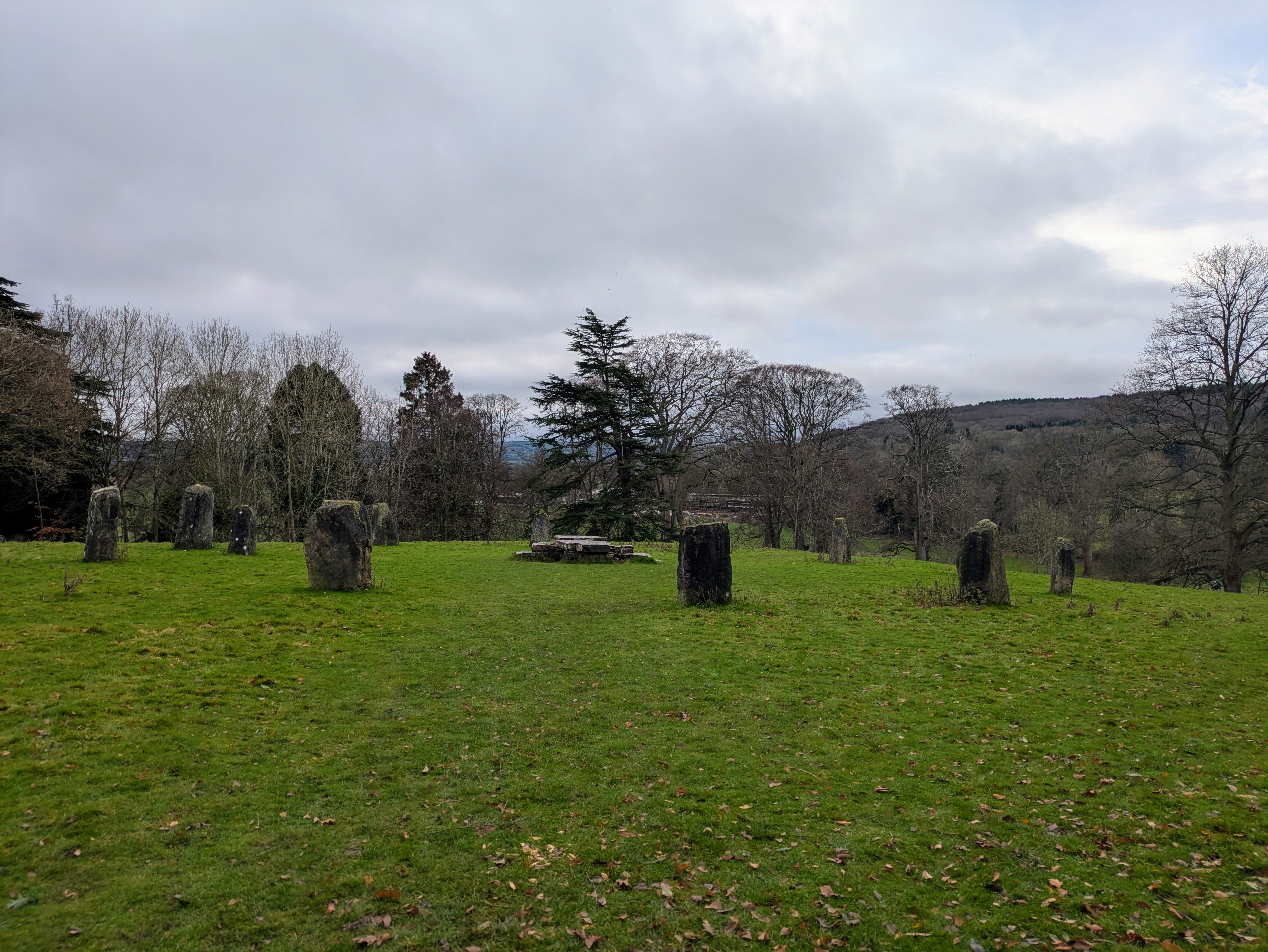
During a recent visit to Ruthin Castle in North Wales, I stumbled upon a hidden gem nestled within the grounds—a quaint stone circle, tucked away among the greenery like a secret waiting to be discovered. As part of my ongoing quest to explore Britain’s mystical and haunted locations, this spot offered a welcome moment of calm in an otherwise energetically charged landscape.
Let’s explore the history of this hidden heritage in North Wales and reflect on what these places offer to paranormal investigators, spiritual seekers and urban explorers.
🏰 A Castle Steeped in History
Nestled in the charming Welsh market town of Ruthin, Denbighshire, stands a castle rich in history, mystery, and lingering whispers from the past. Ruthin Castle is a place of contrasts: grand yet crumbling, tranquil yet tinged with ghostly tales. It’s no surprise that it attracts both history enthusiasts and paranormal investigators.
Originally constructed in the late 13th century under the command of King Edward I, Ruthin Castle was built on the site of an earlier Iron Age fort. Over the centuries, it served many purposes—from royal fortress to noble residence, and later a hospital and prison. During the English Civil War, it suffered heavy damage, and much of the medieval structure now lies in romantic ruin. Part of the site, however, has been transformed into a luxury hotel and spa, offering visitors the chance to sleep among spirits—literally!
👻 Ghosts and Gothic Romance
With such a turbulent past, it’s no surprise Ruthin Castle has earned a reputation for being haunted. Visitors report encounters with the Grey Lady, believed to be a woman punished for crimes of passion, who still roams the dungeons and upper halls. There are also tales of phantom soldiers, mysterious shadows, and sudden drops in temperature.
This mix of historic drama and supernatural suspense makes Ruthin Castle the perfect setting for a witchy wander. I went there to soak up the atmosphere—and ended up discovering something quite unexpected.
🔍 The Curious Stone Circle
While exploring the grounds, I stumbled upon a stone circle, tucked quietly away from the main paths. At first glance, it looks like an ancient sacred site—weathered stones arranged with deliberate symmetry, invoking the spirit of the old ways.
Naturally, my witchy senses tingled with anticipation. Was this a forgotten Druidic site? A place of ancient rituals and earth magic?
But as I stood within the circle and opened myself to the space… I felt nothing. No electric buzz of energy. No shift in the air. Just silence.
🪨 Victorian Folly or Sacred Space?
The stillness led me to a different conclusion. This isn’t a prehistoric stone circle—it’s most likely a Victorian folly, designed to imitate the mystical energy of Britain’s ancient monuments. In the 19th century, it was quite fashionable for aristocrats to commission such features to adorn their estates, fuelling their romantic obsession with ruins, druids, and the supernatural.
Despite its likely modern origin, the circle is beautiful in its own way. It may not pulse with ancient power, but it offers something gentler: a place for reflection, imagination, and quiet connection to the land.
🌿 A Different Kind of Magic
I sat among the stones, listening to the wind, the birds, and the rustle of trees. The castle loomed quietly in the distance, its history resting heavy in the earth. And I realised—not all sacred spaces shout their power. Some simply invite us to pause, breathe, and be present.
If you visit Ruthin Castle, I encourage you to seek out the stone circle. Whether you find it magical, peaceful, or simply pretty to look at, it’s a reminder that even the newest of stones can still tell a story.
🧙♀️ Have You Found Your Own Witchy Place?
Have you ever visited a “modern” stone circle or a decorative sacred space that still felt meaningful? Do you think Victorian follies can hold spiritual energy in their own way?
I’d love to hear your experiences—leave a comment or share your story!

Did you enjoy this article? Download your FREE short story from the Redcliffe Novels series by Catherine Green. Click here.


 SpookyMrsGreen